
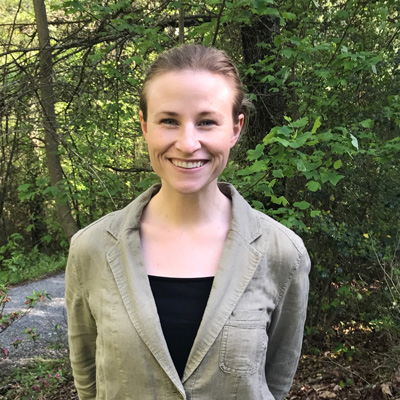
Mary Elizabeth Schmid
Department of Anthropology, University of KentuckyOver the last four decades, farming families throughout North America have suffered from volatile crop prices and increasing input costs. The number of family farms drastically decreased in the U.S. during this period. However, the number of latin@-owned farms in the U.S. significantly rose, in western and southern states.
This dissertation explores the context in which one Mexican-U.S. family group contributes to this unprecedented change. Members of this kin group contribute to multiple agri-food systems in North America as producers of basic grains in the Mexican Bajío and fresh-market produce in southern Appalachia. Through multi-sited ethnographic research, this dissertation brings together diverse voices and examples of strategic uses of time and collaborative agro-food enterprise practices used by structurally marginalized women and men in working families.
The findings lay at the intersections of political debates concerning im/migration, agri-food system policy, rural development, food security and perishable crop agriculture. The dissertation argues that with political economic support cooperative enterprises can strengthen rural economies and democratize globalized agro-food systems.

Brian Callaci, PhD
Chief Economist, Open Markets InstituteBrian Callaci uses a unique, original, hand-collected data set of five hundred and thirty franchise contracts in one state to understand the relationship between big restaurant chains and their franchisees. This is important since the big restaurant chains have insisted that the franchise owner is the employer for the purposes of labor law, forcing any potential union drive to organize one fast food outlet at a time.

Daanika Gordon, PhD
Associate Professor, Department of Sociology & Department of Studies in Race, Colonialism, and Diaspora, Tufts UniversityDaanika Gordon completed her dissertation at the University of Wisconsin in 2018. She is currently an Associate Professor in the Department of Sociology & Department of Studies in Race, Colonialism, and Diaspora at Tufts University.
Daanika analyzes policing in a large Midwestern city to show the relationship between residential segregation and policing practices. Through extensive fieldwork that included ride-alongs with police officers, she shows how police react to and help create segregated spaces, producing racialized outcomes even in the absence of racial intent.

Yasmeen Mekawy, PhD
Assistant Professor in Residence, Northwestern University in QatarYasmeen Mekawy examines how emotion works to either mobilize people to participate in high-risk protest, or conversely, keep people in their homes. Through an in-depth examination of the use of social media in the 2011 uprising in Egypt, she shows how emotional responses to events can help explain why groups mobilize when they do or fail to mobilize at other times.

Adam Mertz, PhD
Adam Mertz completed his dissertation in 2019 at the University of Illinois, Chicago.
Adam's research seeks to understand rural/urban political polarization by examining the rise of Wisconsin teacher unions during the 1970s.
He argues that Wisconsin’s previous farmer-labor coalition was disrupted as rural voters felt that Democratic politicians were unresponsive to their concerns over taxation.
By examining this history, Adam seeks to illuminate the possibilities for reconstituting a progressive farmer-labor alliance.