

Megan Brown, PhD
Associate Professor, Department of Public and Nonprofit Leadership, Metro State UniversityMegan Brown’s (she/her) study investigates the strategic and practical mechanisms through which labor unions, worker and community organizations, and policy makers advanced the $15/hour minimum wages across the U.S. She examines the locally-based strategies employed by labor organizations and the ways these strategies varied across locations so that we can understand how this significant change occurred.

Juyoung Lee, PhD
Assistant Professor, Department of Management and Marketing, The Hong Kong Polytechnic UniversityJuyoung Lee contributes to research on environmental inequalities by examining large-scale determinants of local environmental outcomes. She uses sophisticated quantitative techniques to explore the consequences for local communities of decisions made at corporate headquarters.

Ayca Zayim, PhD
Associate Professor, Department of Sociology, Mount Holyoke CollegeAyca Zayim completed her dissertation in 2018 at the University of Wisconsin. She is currently an Associate Professor in the Department of Sociology at Mount Holyoke College.
Ayca focuses on the relationship between central banks in emerging economies and the financial community to reveal how financial power operates.
Through a study of central banks in Turkey and South Africa, she illuminates both the degrees of maneuver and the constraints on economic policy in these emerging economies that contend with the danger of sudden outflows of capital.
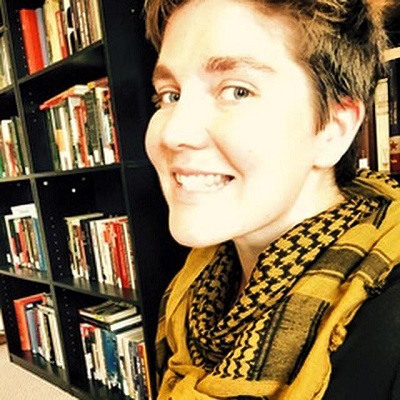
Trish Kahle
Department of History, University of ChicagoAs we contend with the dual threats of economic crisis and climate disruption, historians have begun to ask new questions of the past—in particular, how and why the United States became a high-energy society. By considering the related question—how is high-energy capitalism contested and renegotiated—this project offers a new perspective on the decline of working-class power and the transformation of the American energy regime in the mid-twentieth century. Miners suggested that an energy regime in crisis was in need of a stronger contract with the workers who produced the nation’s power. This contract, they believed, would not be forged in the voting booth or at the diplomatic table, but in the workplace.
This dissertation illuminates a new understanding of the energy crisis that so profoundly shaped miners’ workplace activism since the early 1960s, when the growing discrepancy between apparently peaking energy production and skyrocketing energy consumption became a central concern for both industry and government. By conceptualizing energy politics as extending beyond the realm of politics and into the sphere of work, this dissertation reframes both the problem of decline in the power of the American workers on the job, and the meaning of the energy crisis, which extended far beyond the problems of consumption, culture, and international politics. Indeed, the energy crisis cut to the heart of the American social contract. The crisis and transformation of the American energy regime is essential in explaining the emergence of a series of upheavals in mining workplaces across the Appalachian coalfields over health and safety, environmental degradation, and union democracy.
Energy regime transformation undermined traditional social relations between miners, operators, and the state, on which the UMW had built its power. Across the long 1970s, workers, the new energy companies, and the state renegotiated the bounds of workplace action, democratic politics, and environmental exploitation in the face of an uncertain energy future.

Michael D. Aguirre, PhD
Assistant Professor, Department of History, University of Nevada, RenoMichael Aguirre explores the aftermath of the guest worker Bracero Program that brought Mexican farm workers to the U.S. between 1942 and 1964. Focusing on the Eastern California borderlands of Imperial County, California, and Mexicali, Baja California Norte, he shows how policymakers and business people on both sides of the border strategized to create new agricultural and industrial regimes that continued to disempower working people.

Katrina Quisumbing King
Department of Sociology, University of Wisconsin, MadisonIn 1901, the U.S. Supreme Court ruled that its colonies would be classified as “foreign in a domestic sense,” institutionalizing a legal ambiguity.
Contrary to prevailing work that locates state control in legitimacy, I analyze how ambiguity shaped U.S. relations with the Philippines between 1901 and 1947. I focus on three key moments: (1) the simultaneous classification of Filipinos as citizens, nationals, and aliens under U.S. law; (2) the revocation of military benefits from Filipinos who served on behalf of the U.S. in WWII; and (3) the almost immediate cession of Philippine sovereignty to the U.S. after formal independence. In each of these moments, because of the polysemy of U.S.’s relationship to the Philippines and Filipinos, U.S. elites were able to secure a neocolonial relationship that continued to exploit Filipino labor and resources whilst erasing colonization and responsibilities to colonial subjects from national memory. In each case, the United States made and then revoked promises of juridical citizenship, social welfare benefits and sovereignty.
My study reveals the political consequences of ambiguity, namely that it allows states to skirt political obligations and preserve global supremacy in ever-shifting political climates. By making promises of incorporation, the U.S. could control the terms of inclusion and ultimate exclusion. While the Philippine case is a critical part of U.S. political history, it also demonstrates the broader significance of studying ambiguity as a function of statecraft.