
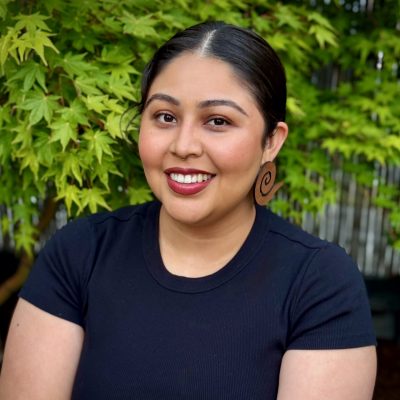
Natalia M. Toscano
PhD Candidate, Department of Chicana and Chicano Studies, University of New MexicoNatalia M. Toscano (she/ella) is a Chicana/o/x studies scholar researching the intersections of social movements, transnationalism, and political imagination. Her dissertation traces the history of exchange between Chicana/o/x communities and the Ejerecito Zapatista de Liberación Nacional (EZLN or Zapatista)—an Indigenous rebel organization from the highlands of Chiapas, Mexico. By analyzing community archives and oral histories of Chicana/o/x organizers, writers, and artists, Natalia’s dissertation examines the strategies of accompaniment used by Chicanx and Zapatista communities to critique the global neoliberal turn and build pluriversal and dignified lives. Broadly, her research theorizes Chicanx political imaginations rooted in anti-capitalist and decolonial horizons.
In the spirit of creating community spaces of self-determination, Natalia is a member of the Chicanx World Making and Futurities project, a do-it-yourself rasquache multi-media and popular education collective. Additionally, she serves as Co-Editor-in-Chief for Regeneración: A Xicanacimiento Studies Journal.

Aarushi Shah
PhD Candidate, Sociomedical Sciences and Anthropology, Columbia UniversityAarushi Shah (she/her) is a PhD candidate in Sociomedical Sciences and Anthropology at Columbia University. Her dissertation is an ethnography of the U.S. criminal legal response to intimate partner violence. Set in a domestic violence court, it follows the broader network of legal and therapeutic actors who adjudicate these cases, including court-mandated rehabilitative programs for people accused or convicted of abuse. The project examines how contested understandings of violence are translated into routine case dispositions, rehabilitative mandates, and therapeutic interventions within the criminal legal system.
Drawing on courtroom observation, archival analysis, and in-depth interviews with legal actors, defendants, program staff, and advocates, the dissertation traces how alternatives to incarceration, intervention mandates, and discretionary plea negotiations shape the everyday meaning of accountability in these cases. Situating domestic violence courts alongside the parallel architecture of drug and mental health courts, Aarushi examines the uneven fit between intimate partner violence and the rehabilitative and problem-solving frameworks increasingly adopted across the criminal legal system. Her work engages scholarship on street-level bureaucracy, legal social construction, therapeutic jurisprudence, and feminist theories of visibility, interpretation, and evidence.
Aarushi is particularly interested in ethnography as a method for examining how institutional practices reproduce social inequalities through ordinary bureaucratic routines and discretionary decision-making. Her work has been supported by the National Science Foundation (NSF GRFP), the National Institutes of Health (T32 in Gender, Sexuality and Health), and the Horowitz Foundation for Social Policy. Before beginning her doctoral work, she received her BA in Social Anthropology and Global Health from Harvard College.

Sergio Saravia
PhD Candidate, Sociology Department, Syracuse UniversitySergio is the 2026-27 Democratic Resilience Fellow funded by the Freedom Together Foundation.
Sergio Saravia (he/him) is a fifth-year PhD candidate in Sociology at Syracuse University. His dissertation, “Union-led Workers’ Political Education and Labor Movement Union Revitalization in the US,” examines why union-led workers’ education has faded from serious debates about labor union revitalization and how strategies to revitalize the labor movement have weakened workers’ political education programs. It seeks to contribute to debates on union revitalization by highlighting the often-overlooked role of labor and union-led workers’ education. It also considers how the production and dissemination of ideas help workers make sense of the labor movement’s present crises, given that unions are sites of critical adult education, knowledge production, and grassroots discussions about resistance and the reshaping of society from the ground up.
Sergio holds a bachelor’s degree from the Pontifical Catholic University of Peru and a master’s degree in Labor and Global Workers’ Rights from the Pennsylvania State University.
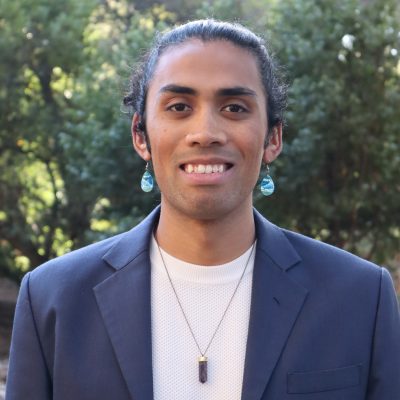
Kieren Rudge
PhD Candidate, Department of Environmental Science, Policy, & Management, University of California, BerkeleyKieren Rudge (they/them) is a PhD candidate in Environmental Science, Policy, & Management at University of California Berkeley. Their dissertation critically analyzes military-led climate change adaptation through a comparative case study in two locations across the U.S. empire: the island territory of Guåhan (Guam) and San Diego County, California in the mainland. Kieren’s work has been published in journals such as Nature Climate Change, Environmental Development, and Urban Climate.
Kieren is also a co-founder of the Critical Pacific Islands Studies Collective (CPISC), a growing network of scholar-activists who conduct interdisciplinary applied research, mentor students, and support the equitable study of the Pacific. Outside of UC Berkeley, they serve as an instructor at Mount Tamalpais College in San Quentin Rehabilitation Center, where they teach Ethnic Studies, emphasizing environmental justice activism and systemic racism in urban planning. They have an MESc from Yale University and a BS from Johns Hopkins University.

Saverio Roscigno
PhD Candidate, Sociology and Science, Knowledge, and Technology, University of California, Irvine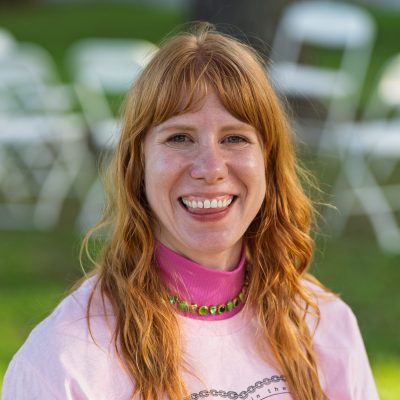
Annie Powers
PhD Candidate, Department of History, University of California, Los AngelesAnnie (she/her) is a volunteer organizer with the Los Angeles Tenants Union and a PhD candidate in History at UCLA. She is a scholar of landless people’s political movements in the 20th century United States, and her work focuses on the National Union of the Homeless (NUH), a formation that seized and redistributed vacant urban land during the Long 1980s.
In addition to studying the NUH, she is an active participant in the group's 21st century revival -- as both a historian and an organizer. Told from Los Angeles, where Annie organizes housed and unhoused people together on the neighborhood level, her dissertation aims to arm poor communities in struggle with the weapon of their own history.