
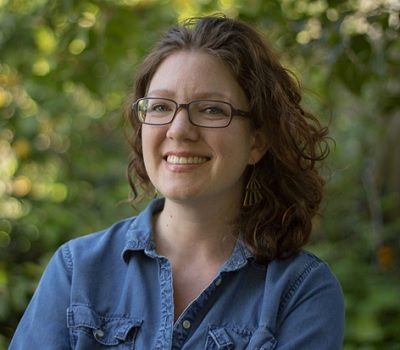
Rhea Myerscough
Department of Political Science, University of California, BerkeleyRegulating Poverty: Race, Business, and the Politics of Payday Lending, 1990-2015
Faced with welfare retrenchment, rising income volatility, and an exponential increase in housing costs, the U.S. working class relies on credit to make ends meet. For millions with no or low credit scores, this credit comes in the form of high-cost cash advances such as payday or auto-title loans. When these products are loosely regulated, borrowers—who are disproportionately poor and Black or Latina/o—experience extended periods of indebtedness that exacerbate existing racial wealth inequalities.
The regulation of markets that low-income households rely on to survive financially is an overlooked political arena with significant consequences for inequality. Policies such as payday lending regulation straddle two different domains—regulatory policy and welfare policy. In policy-making processes, borrowers’ preferences compete against concentrated business interests and racialized stigmas associated with debt and financial hardship.
My dissertation identifies the conditions under which state-level payday lending regulation changes in ways that reduce inequality. To analyze these dynamics, I construct an original dataset of payday lending regulation across all 50 states from 1990 through 2015. I also generate a novel measure of the financial risk faced by borrowers under different regulatory configurations. Using in-depth interviews, public hearing transcripts, roll call voting records, and demographic data, I examine the advocacy strategies, policy discourse, and patterns of political support in cases of attempted and successful policy change across place and time.
This project identifies the racial and social dynamics that shape the politics of payday lending regulation. More broadly, the project speaks to the challenges and possibilities of policy-making when target populations are affected by stigmatized experiences such as debt, addiction, or incarceration.

Chris Herring, PhD
Assistant Professor, Department of Sociology, University of California, Los AngelesChris Herring completed his dissertation at the University of California, Berkeley in 2020. He is currently an Assistant Professor in the Department of Sociology at the University of California, Los Angeles.
Chris is currently writing a study of the three key aspects of homelessness in the US metropolis: the streets, the shelter, and the policies pursued by city government. He analyzes the factors that determines who sleeps in the street or in shelters, and he provides a powerful critique of existing government policies.
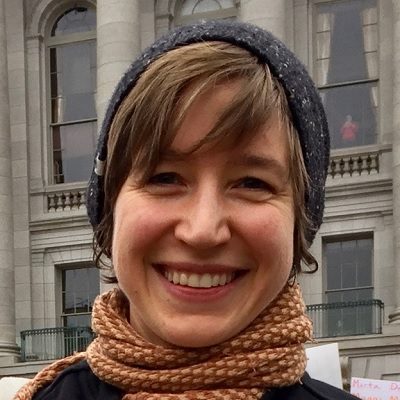
Elsa Noterman
Department of Geography, University of Wisconsin-MadisonVacant Geographies: (Dis)possession, Resistance, and Speculative Futures in Philadelphia’s Abandoned Properties
Abandoned lots and buildings are a ubiquitous feature of post-industrial U.S. cities, markers of the recent housing crisis, and perennial sources of concern for policymakers, researchers, and residents alike. In Philadelphia, where some neighborhoods are currently experiencing a development boom, properties deemed to be ‘vacant’ are increasingly contested as residents challenge prevailing understandings of ‘highest and best use.’
Using archival, legal, and participatory research, my research examines emerging conflicts over the use, value, and ownership of these spaces. In doing so, it puts forward a politically productive framework for considering geographies of vacancy, which recognizes that not only are vacant properties not empty or stable, but they do critical work.
These properties reflect the violent processes that produce them, but also reveal the limits to these processes – limits that offer analytical openings for destabilizing normative notions of law, private property, and urban commons.

Madeleine Pape, PhD
Lecturer, Center for Gender Studies & Institute of Social Sciences, University of LausanneMadeleine Pape analyzes how governing bodies reassert sex as binary and biological despite alternative notions becoming more credible as a result of transgender, intersex, queer, and feminist activism and scholarship. She focuses on how the governing organizations in track and field establish the criteria for deciding who is eligible to compete as a woman.
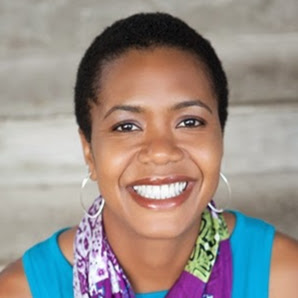
Angela M. Simms
Department of Sociology, University of PennsylvaniaPower, Privilege, and Peril: The Politics of the Black Middle Class in a Majority-Black and Majority-Middle Class Suburban County
To understand how Blacks’ politics shape and are shaped by the contemporary political economy, I ask the questions: In a suburban county where Blacks are the population majority, and where they have significant legislative and executive authority, how is the political agenda developed? What are the policy priorities? Who benefits from these priorities? I focus on three domains: (1) budget development, (2) land use policy and economic development, and (3) public schools.
My data are ethnographic, including direct observation of policy and budget deliberation processes and interviews with people involved in Prince George’s County (PGC), Maryland, politics. I also interview non-politically-engaged residents.
PGC is a majority-Black and middle class suburban county of just under one million residents. It borders Washington, D.C., and has the largest concentration of middle-class Blacks in the United States.
Nantina Vgontzas, PhD
Assistant Professor, School of Labor and Urban Studies, City University of New YorkNantina Vgontzas investigates the organization of work in the fulfillment warehouses of large online retail firms. By comparing both work organization and resistance in warehouses in the U.S. and Germany, she is illuminating how new technologies constrain workers. Yet she is also looking for strategies through which these employees could exert pressure for better compensation and working conditions.