
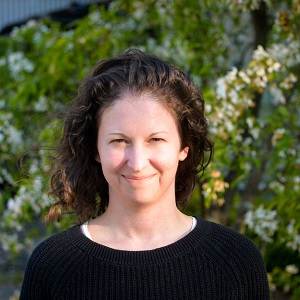
Jessica Katzenstein, PhD
Assistant Professor, School of Social Transformation, Arizona State UniversityU.S. policing has faced a mounting legitimacy crisis over the past several years, from Ferguson’s 2014 protests to the rise of the Movement for Black Lives. While police officials insist that unjust killings are the fault of “bad apples” in the force, critics argue that addressing police violence requires massive structural reform. Yet previous attempts at reforming the police have left untouched the institution’s foundational mandates, leading to recurring crises of legitimacy.
Jessica’s dissertation, “Reforming U.S. Police: Crisis, Labor, and Moral Legitimacy in Maryland,” explores why reforms fail to fulfill their promises.
Drawing on 16 months of ethnographic fieldwork in 20 departments across Maryland, this project examines how police officers absorb and resist reform efforts by translating them into police terms. It traces how police subjects are produced, how they negotiate institutional strictures and working conditions, and how they conceptualize care for their communities. Marrying the insights of critical race studies and American studies with the anthropology of work, ethics, and the state, Jessica’s dissertation interrogates how the everyday labor of policing renders reform into a kind of “productive failure.”
Jessica’s project emerges from a commitment to studying up, or studying the powerful, as a necessary supplement to research with oppressed communities. Her work is grounded in sustained engagement with Baltimore, where she has worked for various human rights and social justice nonprofits. Her research has been supported by multiple National Science Foundation fellowships. Jessica received a BA from Washington University in St. Louis and an MA from Brown University.
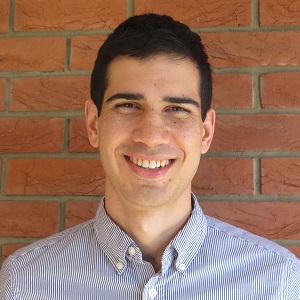
Isaac Jabola-Carolus, PhD
Research Analyst, School of Labor and Urban Studies, City University of New YorkIsaac’s research focuses on paid in-home care work and policy efforts to raise labor standards within this rapidly growing sector. Through survey and interview methods, his dissertation examines how regulatory bodies and labor organizations affect work conditions across U.S. cities. This project emerged from Isaac’s past research on social movement outcomes and from a commitment to developing research questions in dialogue with those in the field. The issue of labor standards implementation has gained particular salience in recent years, as a surge of mobilization and policy change produced Domestic Worker Bills of Rights, minimum wage increases, and greater unionization in this sector. Isaac’s dissertation studies whether and how such developments impact the lives of in-home workers and those in their care.
Isaac has published articles in New Political Science and Social Movement Studies. Previously he served as the New York Chapter Graduate Fellow for the Scholars Strategy Network, taught sociology at Lehman College-CUNY, and worked at the Participatory Budgeting Project. His dissertation research has been supported by the Labor Research and Action Network, the Center for Equitable Growth, and the National Science Foundation. He received his B.A. in development studies from Brown University.
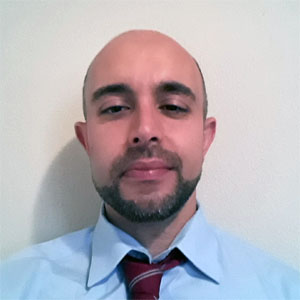
Robert Chlala
Department of Sociology, University of Southern CaliforniaTo many, the initial unfolding of cannabis legalization in the United States appeared to be a typical case of relentless commodification privileging mostly-white elites. But then came California. Among other progressive cannabis-related policies, state regulations for the industry have enshrined stringent labor and environmental protections. Los Angeles, the U.S.’s largest cannabis market, is pioneering a social equity program guaranteeing cannabis licenses and jobs for those from neighborhoods hard-hit by the “war on drugs.”
These transformations raise critical questions that animate my dissertation: how do social movements shape the socio-spatial organization of markets? How are these processes entwined with socially-constructed, place-based relations of difference?
To answer to these questions and explore the progressive potentialities they can inform, I engaged in more than four years of participant observation with Angeleno labor and racial/economic justice groups in cannabis and conducted 75 semi-structured interviews with workers, owners, and organizers. Bridging feminist political-economic geography and economic sociology, my data suggests movements are more than external forces to markets. They operate within and affect daily practices in markets — remaking transactional forms, industrial knowledge and labor relations. Crucial to the influence of movements is the ways organizations confront power relations, anchored in place and constructions of difference (i.e. race, gender, sexuality), that underpin markets. As part of my commitments as a scholar from affected communities, I have published this data in reports and media/films with movement organizations and worked to help shape social equity policies in ways that foreground the experiences of low-income, communities of color at the front lines of cannabis-work - and a changing carceral landscape.
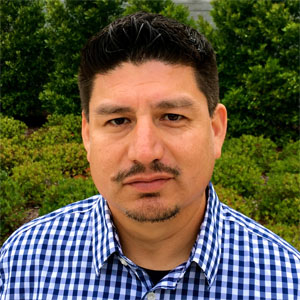
Salvador Rangel, PhD
Assistant Professor, Department of Sociology, Swarthmore CollegeSalvador Rangel came to the United States as an undocumented immigrant. After various years working in the construction and manufacturing sectors, he made his way into higher education, first obtaining a GED and then attending community college. He went on to obtain a BA from Eastern Kentucky University and an MA at the University of Kentucky. His previous hands-on experience animates and informs his current research. His dissertation, “La Jungla: Globalization, Transnational Migrant Labor, and the Meatpacking Industry,” combines ethnographic methodology with macro-level analysis of the changing conditions under global capitalism. His research interests include global political economy, globalization, race, immigration and citizenship. Salvador is a fellow of the American Sociological Association’s Minority Fellowship Program. Outside the academy, Salvador strives to engage in public sociology by publishing analytical and opinion pieces in mass media outlets, such as Truthout and Counterpunch, that aim to make his research accessible to a broader public.
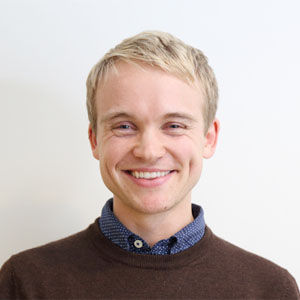
Joss Greene, PhD
Assistant Professor, Department of Sociology, University of California, DavisJoss studies state punishment of gender and sexual variance, with a focus on transgender experiences with the criminal justice system. His dissertation traces prison regulation of gender-nonconformity in California from 1941-2018, drawing on archival research, oral histories, and 13 months of ethnography in trans prisoner advocacy organizations. By situating contemporary struggles over transgender prison policy within this longer lineage of gendered penal control and prisoner resistance, Joss contextualizes our current moment and invites us to learn from successes, setbacks, and unintended consequences of the past.
In addition to his sociological training, Joss has developed his analysis of state violence against trans people based on his own experiences doing trans prisoner advocacy since 2013. He has been a regular volunteer with organizations in the Bay Area, including the Transgender Gender variant Intersex Justice Project, and most recently served as a core collective member with the Sylvia Rivera Law Project. His relationships with organizers and currently incarcerated people motivate him to understand changes in carceral control and how people resist it.
Joss believes that engaged scholarship is a politically powerful tool. To this end, he supports organizations in designing and implementing their own research, leads community workshops based on his data, and has presented his findings to California government officials at the city, county, and state level. He is currently collaborating with a community organizer on the first national research looking at transgender women of color's experiences in the labor market.
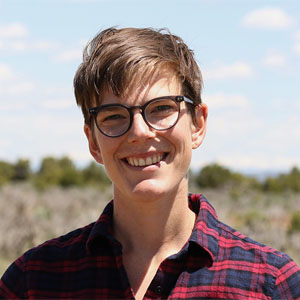
Silas Grant, PhD
Postdoctoral Scholar, Research Justice Shop, University of California, IrvineSilas Grant studies the relationship between oil and gas extraction and settler jurisdiction in northwestern New Mexico’s San Juan Basin. In this region, a recent fracking boom has brought extraction deeper into the Greater Chaco landscape, held sacred by Diné (Navajo) communities living in the area and by Pueblo Nations throughout New Mexico.
The legacies of the Allotment Era have produced a highly-fragmented pattern of jurisdiction over both surface land and subsurface minerals in this checkerboard landscape, where alternating tracts of land are complexly administered by federal, tribal, state, and private entities. Jurisdiction not only has profound implications for where, how, and if extraction takes place: it also affects who gets to have a say in the process.
Drawing on two years of ethnographic and archival research in northwestern New Mexico and in Eastern Navajo Agency, Silas’s research analyzes how different jurisdictions parse out components of the region’s ecology for management purposes. Silas attends to both the extra-local and large-scale cumulative effects of extraction that are not contained by the jurisdictions that exist to manage them. Silas’s dissertation traces how relations of sovereignty, territory, and ordinary life are shaped in part through frictions engendered in contests to control energy extraction. Originally from Halifax, Nova Scotia, Silas earned a BA in International Development Studies from Dalhousie University and an MA in Geography from the University of Toronto. Silas came their dissertation research through involvement in the climate justice movement.