
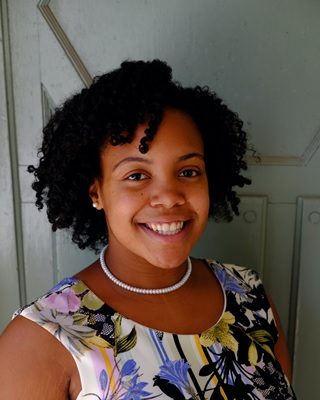
Tiana Wilson, PhD
Assistant Professor, Department of Africana Studies, University of PittsburghTiana U. Wilson's broader research interests include Black Women’s Intellectual History, Black Women’s Internationalism, Women of Color Organizing, and Third World Feminism.
Her dissertation, “Liberation for All: Recovering the Lasting Legacy of the Third World Women’s Alliance (TWWA), 1968-2012,” offers the first comprehensive study of the group and traces the intellectual genealogies of a “women of color” feminist praxis rooted in the Women’s Liberation Movement(s) of the 1970s and still used today for political activity. Through an organizational approach, Wilson explores the intellectual history of the TWWA. Wilson’s previous activism with Black women survivors of domestic violence and sexual assault continues to shape her interest in social justice through the lens of intersectionality.
Drawing on political speeches, newsletters, articles, pamphlets, and travel logs, “Liberation for all” examines Black women's contributions to women of color groups in the U.S. from the 1960s to the present. She argues that members’ theorization of the Third World Woman allowed for a successful multiracial feminist coalition that expanded nationally and internationally. By centering working-class women’s issues related to reproductive health, socio-economic disparities, and state violence, the TWWA coalesced Black, Latina, Asian, and Indigenous women under one collective.
At UT, she led the anti-racism committee in her home department, served as the 2019-2020 Graduate Research Assistant for the Institute for Historical Studies, and was a research fellow for the Center for the Study of Race and Democracy between the years of 2017-2020. Her dissertation has been supported by the Sallie Bingham Center; the Carrie Chapman Catt Center for Women and Politics; Smith College Libraries; and the Rapoport Center for Human Rights and Justice, among others.

Teona Williams, PhD
Assistant Professor, Department of Geography, RutgersTeona Williams is a doctoral candidate in History and African American Studies at Yale University. Her work revolves around U.S environmental history, political ecology, race and ethnic studies, environmental justice, digital humanities, and African American history. Her current work explores Black women agrarianism and the struggle for land reparations from the New Deal era to the Black Power Movement.
Before Yale, she completed a master’s degree in Environmental Justice at the University of Michigan Ann Arbor. There she researched how African American college students navigated the outdoor recreational landscape. In 2017, she won the Clyde Woods Prize for best graduate paper in Black Geographies, for her paper "Build A Wall Around Hyde Park: Race, Space and Policing on the Southside of Chicago 1950-2010," which is currently under review for The Antipode. You can access her article on Police Violence and Environmental Justice here.
She is the author of the essay “Islands of Freedom: The struggle to desegregate Shenandoah and Great Smoky Mountain National Park 1936-1941” in the forthcoming edited collection Not Just Green, Not Just White: Race, Justice, Environmental History.

David Showalter, PhD
Assistant Professor, Department of Sociology, Harvard UniversityDavid Showalter completed their dissertation at the University of California, Berkeley in 2022. They are currently an Assistant Professor in the Department of Sociology at Harvard University.
David is a doctoral candidate in Sociology at the University of California, Berkeley. Their research addresses topics at the intersection of health, law, and politics, particularly drug use and drug policy, and has been published in International Journal of Drug Policy, Theory & Society, Mobilization, and elsewhere.
David’s dissertation, Going Nowhere: Life with Opioids in Backcountry California, is a multisite ethnographic study of opioid use and opioid-related services in several remote counties. The ongoing overdose crisis has affected communities across the United States, from the largest cities to the most rural areas, but research on opioids has typically focused on urban populations. David uses in-depth interviews and participant-observation fieldwork with people who use drugs, service providers, and local officials to reveal how geographic isolation, scarce resources, and tight-knit social networks in small towns shape drug use and efforts to address its consequences. By combining immersive fieldwork with rigorous social theory, David offers unique insights on the links between place, politics, health, and wellbeing in nonurban settings.
Originally from Oklahoma, David holds a master’s degree in Sociology from UC Berkeley and a bachelor’s degree in Tutorial Studies from the University of Chicago. In addition to their academic work, David serves as President of the Board of Directors for NEED, a harm reduction organization based in Berkeley.

Justine Modica, PhD
Assistant Professor of Labor History, School of Industrial and Labor Relations, Cornell UniversityJustine Modica is a PhD candidate in U.S. History at Stanford University, and a PhD minor in Feminist, Gender, and Sexuality Studies. She researches the history of women's labor and care work in the 20th century.
Her dissertation is a historical analysis of child care as a labor issue. The United States experienced a dramatic growth in maternal labor force participation in the second half of the twentieth century but remains one of the only industrialized nations without a comprehensive approach to child care.
Justine's dissertation examines how various groups of Americans built and shaped a waged child care workforce to replace the unwaged labor of mothers caring for children in the home. She examines this history on the levels of both grassroots action and governmental policy, exploring how the approaches of workers, families, municipal governments, federal agencies, and labor unions intersected. Central to her study are the ways that ideologies and practices of race, gender, class, and citizenship shaped the demographics of the childcare workforce, conditions of employment, and the social and monetary value of caring labor.
Justine holds an MA in History from Stanford University and a BA in History from Dartmouth College.
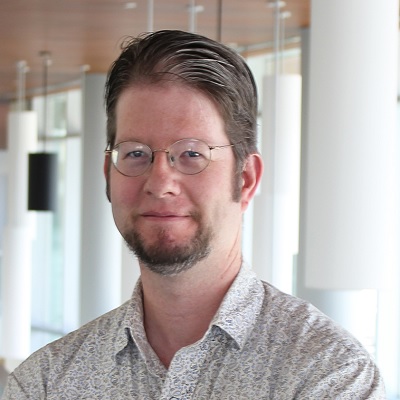
Brian Callaci (2017-2018)
Brian Callaci completed his dissertation in 2019 at the University of Massachusetts. He is currently the Chief Economist at Open Markets Institute.
Brian's dissertation was entitled, “The Historical and Legal Creation of a Fissured Workplace: The Case of Franchising.”
Since 2019, he has been a postdoctoral scholar at the Data and Society Research Institute in New York City. His article, “Control Without Responsibility: The Legal Creation of Franchising, 1960–1980” has been published in Enterprise and Society.
He has written “On Automation and Worker Surveillance” in Phenomenal World and “Frontline Workers Deserve More than Hazard Pay,” at the American Prospect.
He was part of a Zoom Workshop on “Building a Pro-Worker Anti-Monopoly Movement” sponsored by Open Markets in June 2020.
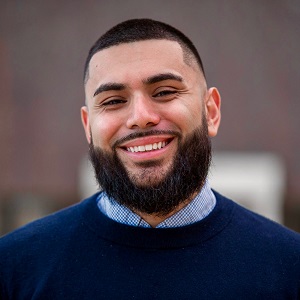
Mo Torres
Department of Sociology, Harvard UniversityMo’s research explores questions of racial capitalism and political economy.
His dissertation considers the case of the U.S. Rust Belt, where cities like Detroit and Flint have long suffered the effects of post-industrial decline. The project explores the rise (and ultimately fall) of Michigan’s controversial “emergency financial management” (EFM) legislation. EFM laws allow Michigan’s governor the ability to appoint an “emergency manager” to assume total control of any city deemed to be in a state of financial emergency. These laws have disproportionately restricted local control in majority-Black cities, and ultimately played a key role in producing Flint’s water crisis. Using archival and interview methods, this project seeks to understand how and why EFM came to be by considering the logics and strategies employed by those with political power - especially state lawmakers and political operatives - at the expense of those without.
Mo lived in Detroit and taught in the Detroit Public Schools district while both the city and district were under state control, thus sparking an interest in EFM in particular, and state-urban political tensions more broadly.
Originally from Sacramento, Mo has a master’s in public policy from the University of Michigan, and a bachelor’s in history and Chicana/o Studies from the University of California, Davis. At the Harvard Kennedy School, he is a Doctoral Fellow in the Multidisciplinary Program in Inequality and Social Policy, and at the Ash Center for Democratic Governance. He is a first-generation college student and a former U.S. Fulbright Scholar to Brazil.