
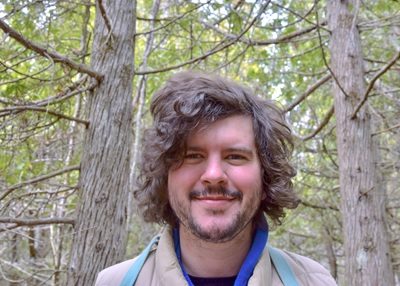
Elan Pochedley
University of Minnesota-Twin Cities, AnthropologyElan Pochedley is a PhD candidate in the Department of Anthropology at the University of Minnesota-Twin Cities, where he has earned dual graduate minors in American Indian & Indigenous Studies (AIIS) and Heritage Studies & Public History (HSPH). He is an enrolled member of the Citizen Potawatomi Nation.
Elan’s dissertation, “Contemporary Neshnabék Territoriality: A Study of Connections and Obligations to Waters, Lands, and Nonhuman Relatives,” analyzes how obligations to nonhuman relatives, popularly categorized as “natural resources,” are actively practiced by Potawatomi and Ojibwe nations. In this multi-sited ethnography, Elan collaborated and conducted ethnographic research with four sovereign Neshnabék nations: the Citizen Potawatomi Nation, the Match-E-Be-Nash-She-Wish Band of Pottawatomi, the Nottawaseppi Huron Band of the Potawatomi, and the White Earth Nation (Ojibwe).
By studying these nations’ obligations to nonhuman relatives alongside their present-day territorial claims, his dissertation is comprised of relational analyses of environmental ethics across Neshnabék nations, reservations, and homelands typically perceived as isolated from one another. Elan studies how these nations navigate emerging technologies, legal approaches, and U.S.-sponsored ecological restoration projects while maintaining specific ethical commitments. His research investigates Potawatomi and Ojibwe nations’ efforts to restore wild rice, rehabilitate eagles and sturgeon, protect bodies of water, and contest infrastructure projects that threaten the health and livelihoods of their human and nonhuman kin. This ethnographic research was conducted with the consent and approval of these nations’ respective tribal councils and/or research review boards.
As the Research Fellow in Geography and Cartography at the Citizen Potawatomi Nation’s Cultural Heritage Center, he is currently utilizing ArcGIS software to spatially map historic Potawatomi homelands, presences, inter-species relational networks, and place names in Indiana. The resulting maps are the basis for an article he recently authored for the Open Rivers: Rethinking Water, Place & Community journal.
His dissertation research has been supported by the National Science Foundation Graduate Research Fellowship Program (NSF GRFP), the Mellon Foundation, the University of Minnesota Diversity of Views & Experiences (DOVE) Fellowship, and the Beverly & Richard Fink Summer Research Fellowship. He recently accepted the Charles Eastman Fellowship at Dartmouth College, which he will begin in the fall of 2021. In 2016, he received his B.A. in Native/Indigenous Studies (Ethnicity & Race Studies) from Columbia College, Columbia University, where he served as Co-President of the Native American Council and was a recipient of the Mellon Mays Undergraduate Fellowship (MMUF).
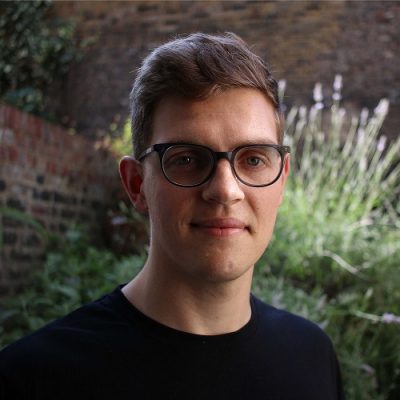
Samuel Maull
Stanford University, Department of AnthropologySam’s dissertation, Carceral Logics: Race, Responsibility, and Family in a San Francisco Jail, is one of the only ‘prison ethnographies’ to have been conducted in the US in half a century. Sam’s work investigates the intersection of anti-blackness, responsibility, kinship, and carcerality and emerges from 3 years of ethnographic research with incarcerated people and the families of incarcerated people in the San Francisco Bay Area.
Approaching incarceration from the perspective of families with incarcerated members de-centers the presumptively male subject of carceral violence and instead shows us the networks through which penal harm are transmitted across intimate relationships and broader communities. It also highlights the ways that discourses of family failure and dysfunction, ubiquitous in the criminal justice system, have positioned black families as responsible for the incarceration of their own kin.
His commitments to abolitionist movements ground Sam’s work. Originally from the UK, Sam studied anthropology at UCL before moving to the US to complete his dissertation at Stanford.
An experienced teacher and organizer, his work has been supported by the Center for Comparative Study of Race and Ethnicity, the Clayman Institute for Gender Research, the Wenner Gren Foundation, and others.
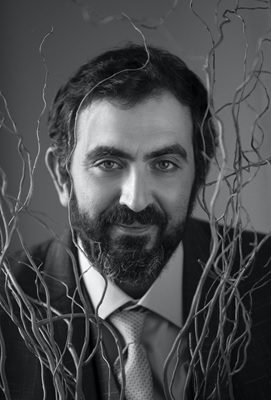
Yoav Hamdani
Columbia University, HistoryYoav Hamdani is a PhD candidate at Columbia University History Department, where he studies violence, slavery, and military history. His principal focus is the intersections between territorial expansion, slavery, Native-American removal, resistance, and military violence.
His dissertation, Uncle Sam’s Slaves: Slavery in the United States Army 1797-1865, reveals the history of military slaves in the first decades of the American Republic. The dissertation argues that thousands of enslaved persons served as officers’ servants, becoming an integral part of the U.S. Army.
By probing the history of military slaves, Hamdani demonstrates how the “Old Army,” the key instrument of statecraft in the early United States, evolved as a national institution that condoned and promoted slavery in its ranks. The dissertation investigates the origins of slavery within the army, the political economy of military slavery as well as the legal, fiscal, and violent mechanisms that sustained it, and the ways in which it influenced the lives of slaves and soldiers. It emphasizes the national dimension of slavery and the government’s commitment to it, by unearthing the role of previously unregarded men and women in the nation’s military history and their involuntary participation in the building of an American Continental Empire.
Originally from Ashdod, Israel, Yoav graduated from Tel-Aviv University’s Multidisciplinary Honors B.A. Program in Humanities and Arts. He started his studies at Columbia University in 2015.
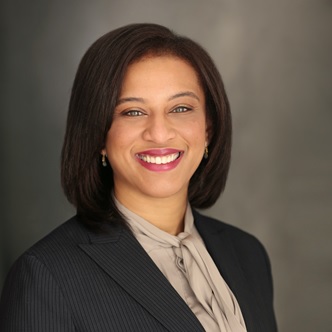
Sabrina Dycus
New York University, SociologySabrina’s research interests include law and society, the sociology of expertise, and social theory. Sabrina’s dissertation research uses qualitative and quantitative data (observations, interviews, archival analysis, and a large administrative database) to understand immigration removal proceedings as sites of state social control. Immigration removal proceedings are the primary mechanism that state actors use to deport people, and people undergo the same process whether an immigration judge ultimately orders them deported or not.
Sabrina’s dissertation will deepen our understanding of the state’s social control capacity vis-à-vis its immigration law and enforcement apparatus. Additionally, executive branch court proceedings are understudied in the literature (immigration courts are located within the U.S. Department of Justice). Providing an interior account of how immigration court proceedings operate as modes of state social control is an important step towards understanding how courts throughout the federal executive branch—around 450 in total—extend the state’s social control capacity deeper into our lives.
Sabrina has a master’s degree in public administration from the Harvard Kennedy School and a JD from Yale Law School. Before beginning graduate school, Sabrina practiced law for a number of years. Sabrina is the proud daughter of Haitian immigrants and mother to three young children. She lives in New York City.

Jennifer Zelnick, PhD
Lead Program Analyst, State Bar of CaliforniaJennifer’s dissertation, “Life and Death After America: Deportee Transnationalism Among Cambodian American Refugees,” examines the deportation process and lifeworlds of deported and deportable Cambodian American refugees. Drawing on over two years of multi-sited transnational ethnographic fieldwork in Cambodia and California, her dissertation challenges extant binaries of migrant il/legality and refugee “deservingness” while simultaneously destabilizing ideas about diasporic belonging, US militarism and empire, and the homeland. Jennifer argues that deportee transnationalism reveals the sociopolitical and legal complexities surrounding declining liberal humanitarianism’s acceptance of refugees, alongside the expansion of the US deportation regime.
Jennifer’s project emerges from deep commitments to research in service of social justice. Her work is grounded in direct service to deportees, deportable refugees, and deportee-serving organizations through pro bono legal and policy support to assist individuals and families fighting deportations.
Jennifer’s work has been supported by the National Science Foundation (#1823363), the Wenner-Gren Foundation for Anthropological Research, the Social Science Research Council International Dissertation Fellowship Program, the Center for Khmer Studies, and the University of California, Irvine (Anthropology Department, Center for Global Peace and Conflict Studies, Center for Asian Studies, and Christian Werner Fellowship). She received her BA in Anthropology from Haverford College, and her MA in Social Sciences from the University of Chicago.
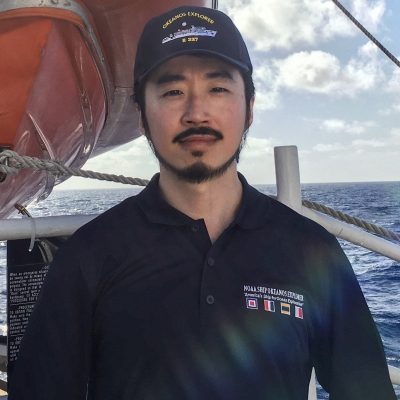
Liang Wu, PhD
Postdoctoral Associate, Department of Science & Technology and the Southeast Asia Program, Cornell UniversityWu is a Postdoctoral Associate at the Department of Science and Technology Studies through the Southeast Asia Program at Cornell University. He is also a former Visiting Assistant Professor at Bates College, and Science Communication and Marine Policy Specialist at the National Oceanic and Atmospheric Administration (NOAA). His dissertation titled Containerization of Seafarers in the International Shipping Industry: Contemporary Seamanship, Maritime Social Infrastructures, and Mobility Politics of Global Logistics is supported by the 2021 Center for Engaged Scholarship Dissertation Fellowship.
Since 2006, through mixed methodologies led by ethnographic fieldwork and engagement at ports in Asia and the US, onboard, overseas, and online, Wu has been studying the lifeworlds and lifeways of seafarers – maritime workers delivering 90% of international trade who largely come from the Global South regions of Asia. His work delves into the techno-economic, infrastructural, legal, geographical, social, and environmental conditions and ramifications of container shipping in the postwar era, thereby unraveling the socio-technical, -political, and -natural relations generated by the global expedition of material goods and products, and systematic workings of commodity fetishism, racial capitalism, environmental extractivism, and neocolonial globalism of our times.
At Cornell, Wu is working on his publications including his book project about the sea and power – in its various senses from propulsion to organization, governance, and resilience. Wu specifically highlights Southeast Asian seafarers as the backbone of not only the international maritime workforce, but also the US and global economy and everyday lives in modern times. At the same time, Wu emphasizes that these overseas workers are navigating and bearing the brunt of climate change, geopolitical-economic currents, and industrial developments, including containerization in recent decades and the latest decarbonization endeavors of shipping known as “the 4th Propulsion Revolution”.
Overall, Wu’s industrial engagement and interdisciplinary research and teaching are bridging social oceanography, blue humanities, political economy, political ecology, and critical maritime, mobility, technology and labor, policy, globalization, and Anthropocene studies and advocacy. He seeks to understand the complex relationship between humanity and the oceans, and examine the intersection of translocal, transregional economy, society, and ecology of the sea beyond the maritime politics and dynamics of supply chain logistics. As an engaged scholar, Wu is actively involved in various organizations and working groups for the socially-just and sustainable development and future of oceanic communities and humanity.