

Venus Green
Postdoctoral Fellow, Department of Anthropology and Sociology, Williams CollegeVenus Green is a Black feminist intersectional sociologist whose research is located at the intersections of racialized and gendered labor regimes, care work, collective organizing, antiblack violence, histories of racial slavery, and identity formations.
Her dissertation examines how Black and Afro-descendent domestic workers have been central to the most progressive elements of the labor movement in the U.S. and how the gendered antiblack violence of slavery's afterlife shapes their work experiences and fight for survival. Through semi-structured interviews, Black feminist grounded ethnography, media analysis, and oral histories of Black women domestic workers' political organizing practices and work experiences in Boston, New York City, and D.C., this research investigates how Black and African descendent domestic workers and domestic workers organizations infuse radical care work into community building efforts to mobilize support at the grassroots and federal levels for the Domestic Workers Bill of Rights and other struggles for workers’ protections and dignity. This research seeks to understand how Black women’s intersectional organizing around care work strengthens Black radicalism within the mainstream labor movement and re-envisions critical paths toward Black emancipation.
In connection with this research, she is currently an intern with the Massachusetts Coalition of Domestic Workers and a volunteer with Matahari Women Workers’ Center, and was a research analyst at Social Action for Health in East London.
Venus holds an M.A. in Medicine, Health, and Society from Vanderbilt University and a B.A. in political science, African American Studies, and Women and Gender Studies from the University of California, Irvine. Her work has been supported by the National Science Foundation, the Mellon World Studies Interdisciplinary Project, the Labor Action and Research Network, the Nichols Humanitarian Fund, the W.E.B. Du Bois Center at UMass Amherst, the Graduate School at UMass Amherst, the Center for Global Work and Employment at Rutgers, and the Center for Employment Equity at UMass Amherst, to name a few. Her work has been published in Sociology Spectrum.

Caitlin Curry, PhD
Assistant Professor, Department of Criminology, Hamline UniversityCaitlin Curry completed their dissertation at the University of Minnesota in 2024. They are currently an Assistant Professor in the Department of Criminology at Hamline University.
Caitlin uses qualitative methods to investigate how the criminal legal system exacerbates and legitimizes racial and class inequalities, focusing specifically on how legal professionals and impacted community members experience and resist mass criminalization in their daily lives.
Their dissertation examines the role of public defenders in criminal justice reform and transformation, using a multi-method case study of Gideon’s Promise, an Atlanta-based public defense organization that trains defenders to resist mass incarceration. The results lay critical groundwork for research on public defense and penal change, unmasking both the organizational context and individual struggles of progressive criminal defense in the U.S. South.
Caitlin also works with Minnesota organizations that seek to dismantle mass criminalization and support people with criminal records including All Square, Minnesota Justice Research Center, and Children of Incarcerated Caregivers.
Caitlin has a B.A. and M.A. from the University of Arkansas and an M.A. from the University of Minnesota.

Sadie Bergen, PhD
Postdoctoral Fellow in Medical History & Bioethics, University of Wisconsin-MadisonSadie Bergen (she/her) studies the history and ethics of reproductive health with a focus on the ways that American institutions—from hospitals to corporations—have shaped reproductive health inequities.
Her dissertation examines the history of neonatal intensive care as a proving ground for some of the most significant transformations in the political economy and reproductive politics of the late twentieth-century medical-industrial complex.
Sadie works across the disciplines of history and public health, and has published work on fetal protection laws, the abortion politics of physicians, long-acting injectable HIV treatments, and the experiences of women living with endometriosis. Sadie is a proud organizer and union steward for the Student Workers of Columbia and has worked as a case manager for the New York Abortion Access Fund. She received a B.A. in History from the University of Chicago in 2015. She is also a recipient of the Institute for Citizens & Scholars Women’s Studies Fellowship.

Rishi Awatramani, PhD
Postdoctoral Scholar, Equity Research Institute, University of Southern CaliforniaRishi Awatramani’s research employs ethnographic and comparative methods to examine the race and class politics of urban working-classes, and historical patterns of social protest. His research interests are in the fields of Race and Ethnicity, Labor and Labor Movements, and Political Sociology.
His dissertation is a study of how deindustrialization and neoliberalism transform the traditional mechanisms of organizing race and class politics among working-class Mexican-Americans in Chicago's former steel-producing neighborhoods. Drawing on extensive ethnography and archival materials, he shows how the changing political economy of the urban periphery, the decline of neighborhood civil society, and political competition between teachers and police shape working-class racial politics and collective action.
Prior to pursuing academic research, Rishi worked in community and labor organizing for more than 12 years. Rishi’s project is also supported by a Russell Sage Foundation Dissertation Research Grant and a Graduate Research Fellowship from the Alexander Grass Humanities Institute.
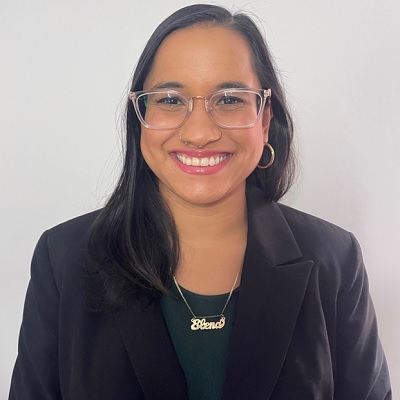
Elena Marie Rosario
Department of History, University of MichiganElena Marie Rosario is a public historian. Her research interests include labor, education, urban development, social movements, and identity formation. She pairs in-depth archival research with community-centered methodologies, such as oral histories and public engagement projects, to foreground Puerto Rican contributions to the city of Hartford and the state of Connecticut.
Her dissertation, “Puerto Rican Tobacco Migration, Postwar Settlement, and Community Development in Hartford, Connecticut, 1947-1973,” documents the history of Puerto Ricans in the city and state and is based on the belief that communities are invested in knowledge-making practices and are entitled to seeing themselves in historical narratives. It also employs participatory methodologies to uncover records of marginalized communities and produce material that makes stories accessible through deliverables.
Elena is a member of Hartford’s Puerto Rican community, and her scholarship is deeply rooted in her identity as a Puerto Rican woman of the diaspora. She received her B.A. from Connecticut College in 2014, where she was selected as a Mellon Mays Undergraduate Fellow. She is a 2022 Humanities Without Walls Career Diversity Workshop Fellow and a 2022-2023 Ford Foundation Dissertation Fellow.
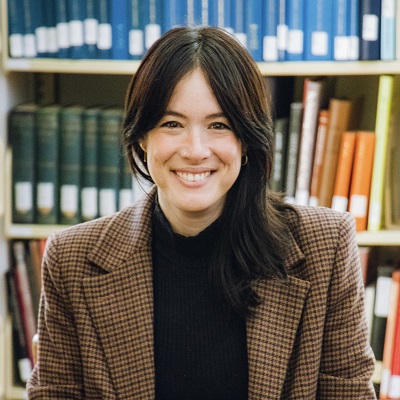
Lola Loustaunau
Department of Sociology, University of OregonLola Loustaunau is a public sociologist. Her research is located at the intersections of labor, migration studies, collective organizing, gender, and race. Lola’s work has focused on job quality, labor mobility, and the extensive impacts of low-quality precarious work in the lives of low-wage workers.
Her dissertation titled “The hands that feed us: experiences of migrant workers in food processing” explores the nexus between industrial food production, migration policies, and precarious working conditions. Centering first-hand accounts of a majority migrant and feminized workforce employed in twenty food processing companies, I develop a broad analysis of the industry’s working conditions and examine the racialized and gendered impacts these conditions have on the workers’ physical and emotional health, economic stability, and family well-being.
Her interest in the experiences of these particularly marginalized and vulnerable workers is part of a political commitment to build more equitable and sustainable workplaces, reflected in her methodological approaches. The questions and themes she pursues have been shaped by workers’ struggles and constructed through close collaboration with migrant workers’ organizations.
Lola received a B.A. in Political Science at the University of Buenos Aires and is the 2021-2021 Wayne Morse Fellow at the University of Oregon. She will be the 2022-2023 Anna Julia Cooper Postdoctoral Fellow at the University of Wisconsin-Madison