
New Fellows
Meet Our 2026-2027 CES Fellows
The Center for Engaged Scholarship is pleased to announce our 2026-27 awardees. We will be supporting 11 fellows with $40,000 each so they are able to devote the year to dissertation writing. Our twelfth awardee has deferred their fellowship until the 2027-28 academic year.
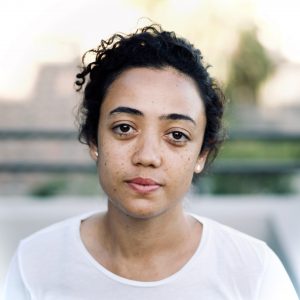
Catherine Crooke
Catherine Crooke (she/they) is a lawyer and PhD candidate in the Department of Sociology at UCLA. Her dissertation draws on over four years of participant observation and nearly 100 interviews with Los Angeles-based legal service providers to examine the U.S. immigration system as a site of both legal promise and institutional erosion. Foregrounding the everyday experiences of immigration lawyers, she shows how institutional instability reshapes professional practice and transforms the meaning of legality itself. More broadly, her project offers a framework for understanding how professionals sustain moral commitments within institutions marked by constraint.
Catherine’s scholarship appears in Law & Society Review, Law & Social Inquiry, and Qualitative Research, and has previously been supported by the Ford Foundation and the American Sociological Association’s Minority Fellowship Program. She holds a JD from Yale Law School, an MSc from the University of Oxford, and a BA from Columbia University.

Anna DalCortivo
Anna DalCortivo (she/her) is a PhD Candidate in Sociology at the University of Minnesota. Her research reconceptualizes public safety by exploring how law, social movements, and community governance shape one another through everyday practices and collective action. Challenging approaches that treat socio-legal and social movement research as separate domains, Anna shows how communities build safety, accountability, and political life outside of formal legal systems, highlighting how these efforts reshape public safety on their own terms.
Her dissertation, Building the Square: Protest, Governance, and Abolitionist Safety at George Floyd Square, draws on five years of ethnographic research, fifty-nine interviews, archival materials, and visual analysis to explore how a protest site marking a police muder became civic infrastructure for care, accountability, and public safety outside formal institutions. She demonstrates how residents construct norms and sustain care, transforming public safety into a relational, community-driven achievement.
Her award-winning scholarship appears in Mobilization and Contexts, and her public writing in The Nation. At the University of Minnesota, she is an award-winning instructor recognized for her creative and engaged pedagogy.
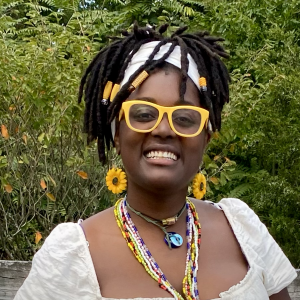
Raquel Douglas
Raquel Douglas (she/her) is a PhD Candidate in Sociology at Brown University. Her research focuses on environmental sociology, cultural studies, and Africana studies.
Drawing on multiple methods, her dissertation explores how Black farmers understand the cultural, political, and spiritual significance of farming. “Black Soil and Soul” uplifts the worldviews, values, and practices that inform how North Carolinian Black farmers combat food apartheid and the ongoing decline of Black farmland. Specifically, she calls attention to the ways that religion, spirituality, and the need for healing continue to shape the way that Black farmers relate to their land and their communities. This research has been supported by the University of North Carolina-Chapel Hill Wilson Library, Swearer Center for Public Service, Center for the Study of Race and Ethnicity in America, and the Institute at Brown for Environment and Society.
Raquel is passionate about reconnecting communities who have been intentionally separated from the land with an intimate connection to the Earth. A budding farmer in her own right, Raquel has spent the last three years collectively growing culturally relevant veggies and medicinal herbs on Black owned-farms in Rhode Island and North Carolina. In these roles, she grew food for communities living under food apartheid and connected dozens of BIPOC folks with limited exposure to farming to the land through workshops, events, and relationship-building. She recently relocated to Durham to manage a new community garden, collaboratively build a community land trust, and teach land-based skills.
She holds a BA in Economics and Africana Studies from Williams College and MA in Sociology from Brown University.
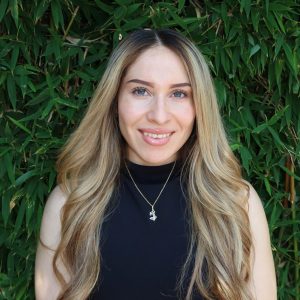
Jaqueline Lepe
Jaqueline Lepe (she/her) is a PhD candidate in Sociology at UC Berkeley. Her dissertation examines California’s shift to community-based youth justice under Senate Bill 823, focusing on how frontline juvenile justice bureaucrats shape the policy’s implementation, to illuminate patterns of resistance and co-optation within the penal system. Drawing on enactive ethnography, interviews, and archival research, she shows how efforts at systemic reform through decarceration are often undermined by frontline bureaucrats committed to punitive logics.
As a first-generation Latina sociologist with prior juvenile justice involvement, Jaqueline is dedicated to mentoring system-impacted youth. During her fieldwork, she served as a college instructor, tutor, and mentor to incarcerated youth in a Southern California juvenile detention facility.
Jaqueline’s research has received support from the National Science Foundation, along with UC Berkeley’s Chancellor’s Fellowship and the UC President’s Pre-Professoriate Fellowship. She holds an M.A. from UC Berkeley and a B.A. from UC Santa Barbara.
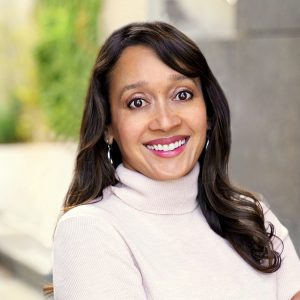
Maya Manian
Maya Manian (she/her) is a professor of law and Faculty Director of the Health Law and Policy Program at American University Washington College of Law and a PhD candidate in medical sociology at UCSF. Her research examines the intersection of law and reproductive health care, focusing on how legal regulation shapes clinical practice and patient experiences.
Her dissertation, Legal Consciousness and the Side Effects of Abortion Bans: Genetic Counselors’ Perspectives on Navigating Abortion Law in the Post-Dobbs Era, investigates how abortion restrictions reshape prenatal care through the everyday work of genetic counselors. Drawing on in-depth interviews, she explores how counselors interpret abortion law and how these interpretations shape clinical decision-making, professional relationships, and patient care. By centering providers’ interpretive work, the study shows how law is enacted in practice and its implications for equity, access, and health care workforce sustainability.
Her research has been supported by the Society of Family Planning, the UCSF Newcomer Health Policy Scholarship, and the UCSF Strauss Dissertation Scholarship. She holds a J.D. from Harvard Law School and a B.A. from the University of Michigan.
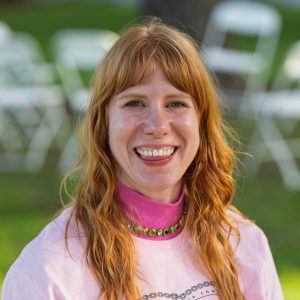
Annie Powers
Annie (she/her) is a volunteer organizer with the Los Angeles Tenants Union and a PhD candidate in History at UCLA. She is a scholar of landless people’s political movements in the 20th century United States, and her work focuses on the National Union of the Homeless (NUH), a formation that seized and redistributed vacant urban land during the Long 1980s.
In addition to studying the NUH, she is an active participant in the group's 21st century revival -- as both a historian and an organizer. Told from Los Angeles, where Annie organizes housed and unhoused people together on the neighborhood level, her dissertation aims to arm poor communities in struggle with the weapon of their own history.

Saverio Roscigno
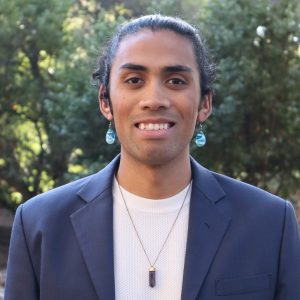
Kieren Rudge
Kieren Rudge (they/them) is a PhD candidate in Environmental Science, Policy, & Management at University of California Berkeley. Their dissertation critically analyzes military-led climate change adaptation through a comparative case study in two locations across the U.S. empire: the island territory of Guåhan (Guam) and San Diego County, California in the mainland. Kieren’s work has been published in journals such as Nature Climate Change, Environmental Development, and Urban Climate.
Kieren is also a co-founder of the Critical Pacific Islands Studies Collective (CPISC), a growing network of scholar-activists who conduct interdisciplinary applied research, mentor students, and support the equitable study of the Pacific. Outside of UC Berkeley, they serve as an instructor at Mount Tamalpais College in San Quentin Rehabilitation Center, where they teach Ethnic Studies, emphasizing environmental justice activism and systemic racism in urban planning. They have an MESc from Yale University and a BS from Johns Hopkins University.
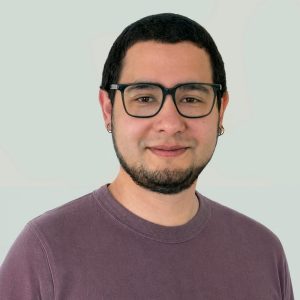
Sergio Saravia
Sergio is the 2026-27 Democratic Resilience Fellow funded by the Freedom Together Foundation.
Sergio Saravia (he/him) is a fifth-year PhD candidate in Sociology at Syracuse University. His dissertation, “Union-led Workers’ Political Education and Labor Movement Union Revitalization in the US,” examines why union-led workers’ education has faded from serious debates about labor union revitalization and how strategies to revitalize the labor movement have weakened workers’ political education programs. It seeks to contribute to debates on union revitalization by highlighting the often-overlooked role of labor and union-led workers’ education. It also considers how the production and dissemination of ideas help workers make sense of the labor movement’s present crises, given that unions are sites of critical adult education, knowledge production, and grassroots discussions about resistance and the reshaping of society from the ground up.
Sergio holds a bachelor’s degree from the Pontifical Catholic University of Peru and a master’s degree in Labor and Global Workers’ Rights from the Pennsylvania State University.

Aarushi Shah
Aarushi Shah (she/her) is a PhD candidate in Sociomedical Sciences and Anthropology at Columbia University. Her dissertation is an ethnography of the U.S. criminal legal response to intimate partner violence. Set in a domestic violence court, it follows the broader network of legal and therapeutic actors who adjudicate these cases, including court-mandated rehabilitative programs for people accused or convicted of abuse. The project examines how contested understandings of violence are translated into routine case dispositions, rehabilitative mandates, and therapeutic interventions within the criminal legal system.
Drawing on courtroom observation, archival analysis, and in-depth interviews with legal actors, defendants, program staff, and advocates, the dissertation traces how alternatives to incarceration, intervention mandates, and discretionary plea negotiations shape the everyday meaning of accountability in these cases. Situating domestic violence courts alongside the parallel architecture of drug and mental health courts, Aarushi examines the uneven fit between intimate partner violence and the rehabilitative and problem-solving frameworks increasingly adopted across the criminal legal system. Her work engages scholarship on street-level bureaucracy, legal social construction, therapeutic jurisprudence, and feminist theories of visibility, interpretation, and evidence.
Aarushi is particularly interested in ethnography as a method for examining how institutional practices reproduce social inequalities through ordinary bureaucratic routines and discretionary decision-making. Her work has been supported by the National Science Foundation (NSF GRFP), the National Institutes of Health (T32 in Gender, Sexuality and Health), and the Horowitz Foundation for Social Policy. Before beginning her doctoral work, she received her BA in Social Anthropology and Global Health from Harvard College.
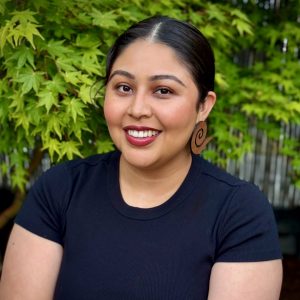
Natalia M. Toscano
Natalia M. Toscano (she/ella) is a Chicana/o/x studies scholar researching the intersections of social movements, transnationalism, and political imagination. Her dissertation traces the history of exchange between Chicana/o/x communities and the Ejerecito Zapatista de Liberación Nacional (EZLN or Zapatista)—an Indigenous rebel organization from the highlands of Chiapas, Mexico. By analyzing community archives and oral histories of Chicana/o/x organizers, writers, and artists, Natalia’s dissertation examines the strategies of accompaniment used by Chicanx and Zapatista communities to critique the global neoliberal turn and build pluriversal and dignified lives. Broadly, her research theorizes Chicanx political imaginations rooted in anti-capitalist and decolonial horizons.
In the spirit of creating community spaces of self-determination, Natalia is a member of the Chicanx World Making and Futurities project, a do-it-yourself rasquache multi-media and popular education collective. Additionally, she serves as Co-Editor-in-Chief for Regeneración: A Xicanacimiento Studies Journal.
2026-2027 Honorable Mentions
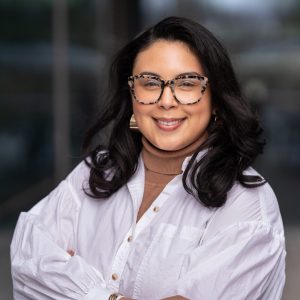
Michelle Rodriguez
Michelle (she/her) is a certified full spectrum doula and community organizer. Her dissertation offers an ethnographic account of how Black midwives, doulas, and birthing people in the Bay Area mobilize embodied, de-medicalized approaches to care that she conceptualizes as “centering.” It examines how these practices respond to the limitations of state-provided reproductive health systems, particularly for Black birthing people.
Through fieldwork with Black birthworkers and families, the project traces centering as both a practical and political mode of care grounded in embodied knowledge, ancestral traditions, and community-based support systems. These practices foster more autonomous, affirming, and life-sustaining birth experiences while challenging biomedical authority and state regulation of reproduction.
Ultimately, the dissertation argues that Black birthworkers are not only offering alternative models of care, but are also actively reimagining reproductive politics through frameworks of community care, collective liberation, and reproductive justice rooted in Black feminist praxis.
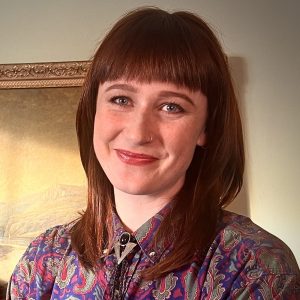
Chloé Sudduth
Chloé Sudduth (she/her) is a PhD candidate at Rutgers University whose work sits at the intersection of digital technologies, law, and punishment. She studies the ways that Big Data, algorithmic systems, and criminal legal logics operate to expand punishment and shape power in contemporary society. Her dissertation explores algorithmic tenant screening systems in the private rental housing market as both technical infrastructures and cultural artifacts. These tools become a site where symbolic power is produced, contested, and legitimated. This work explores how notions of risk and broader histories of quantification are leveraged in the housing domain through algorithmic tools.
Sudduth has a B.A. in Sociology/Anthropology and Public Policy from Hobart and William Smith Colleges and an M.A. in Criminal Justice from Rutgers University. Sudduth’s research interests are deeply tied to her prior work as an advocate and organizer. She also loves making art and fly fishing.

Şeyma Özdemir
Şeyma Özdemir (she/her) is a fourth-year PhD candidate in Sociology at the University of California, Santa Barbara. Her research examines how U.S. child labor law produces “tiered childhoods,” where farmworker children—especially Mexican American, Indigenous, and migrant youth—are pushed to balance schooling and labor under conditions of economic precarity and immigration enforcement. Through interviews, ethnography, and archival research, she analyzes how families and institutions navigate tensions between work, education, and survival, highlighting how policy shapes inequality and access to schooling.
Şeyma organizes with farmworker movements and food mutual aid groups. She holds a BA in Political Science and International Relations from Boğaziçi University in Istanbul, Turkey, and an MA in Sociology from Binghamton University.
Clara Beatriz Perez
Clara Beatriz Perez is a PhD Candidate in the Department of Geography at UC Berkeley and a practicing filmmaker and photographer. She creates community-based research film projects that investigate questions of memory, place, and belonging. Her work is generously supported by the National Science Foundation Graduate Research Fellowship, the Institute for the Study of Societal Issues Graduate Fellowship, the John L. Simpson Pre-Dissertation Research Fellowship, and the Social Sciences Research Pathways Program.